

Bosch tumble dryer buying guide: 2026
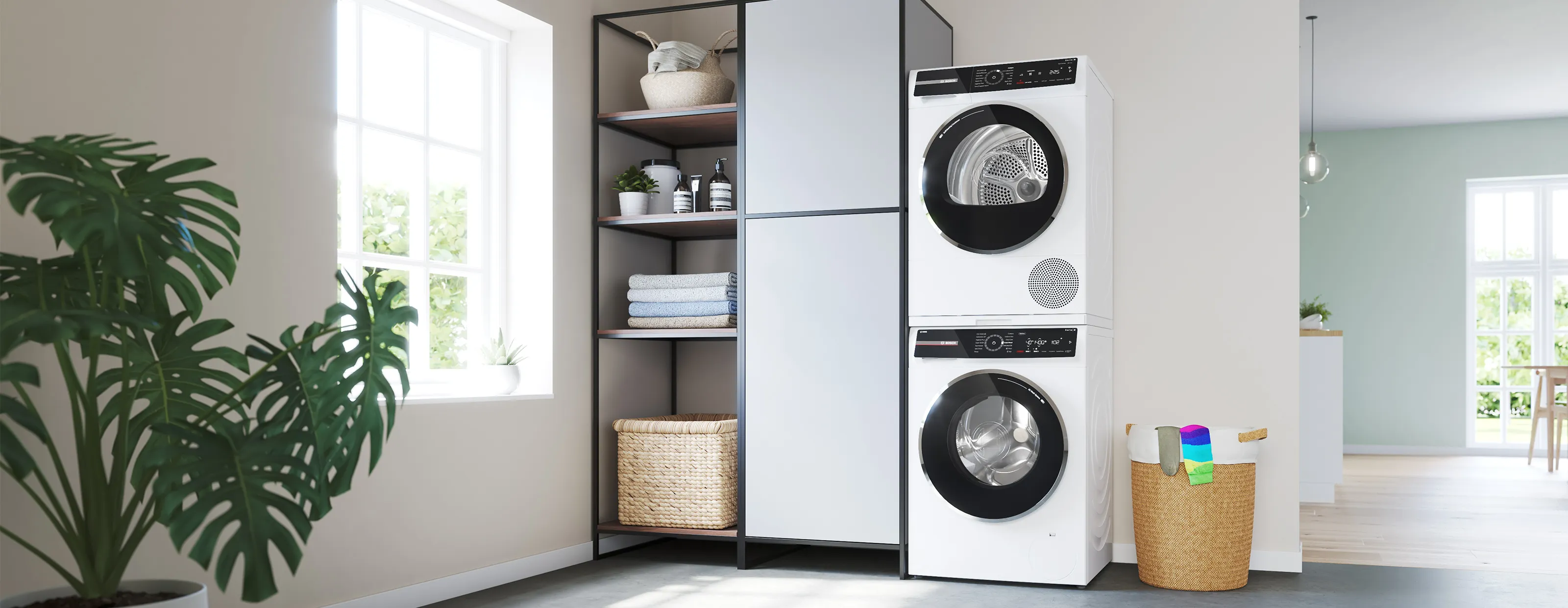
A step-by-step buying guide to match the perfect tumble dryer to your household.
Which dryer should you buy?
A tumble dryer can help make laundry care easier. The right model for you will depend on your household size, laundry habits and preferred features. A larger household may benefit from a 9 kg capacity model, while others may prioritise programme options, smart features or installation requirements.1. Heat pump dryer or washer dryer: what’s the difference?
There are two options to consider depending on your needs: a heat pump tumble dryer, or a washer dryer that combines washing and drying in one appliance. If you have space for a separate dryer, explore our heat pump tumble dryers. If space is limited or you prefer one appliance for both washing and drying, a washer dryer could be a good option.
- What is a heat pump dryer? A heat pump dryer reuses warm air during the drying process rather than continuously generating new heat.
- What is a washer dryer? A washer dryer combines washing and drying functions in a single appliance. Drying capacity is often lower than the washing capacity and may be lower than that of a standalone dryer.
2. How much laundry should my dryer hold?
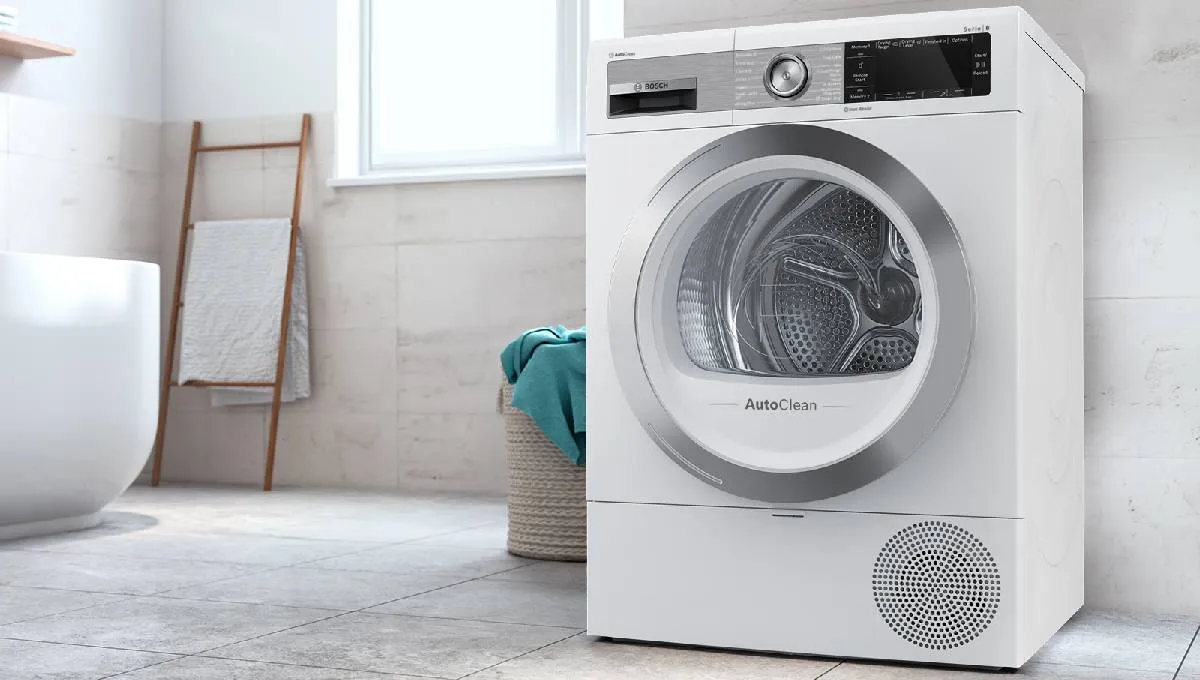
A dryer's capacity indicates how many kilograms of laundry it can dry in a single cycle. Helping you choose a model that suits your household and laundry needs, consider pairing your dryer capacity with that of your washing machine.
Bosch dryers are available in 8kg and 9kg capacity
- 8 kg dryer: Suitable for households of one to four people with typical drying needs.
- 9 kg dryer: Suitable for larger households and bulkier items, such as duvets and bedding.

3. What about an energy-efficient dryer?
Tumble dryers can use a considerable amount of energy, making energy efficiency an important consideration when choosing a model.
Bosch heat pump dryers are designed to reuse warm air during the drying process. By recirculating heat, they require less energy than conventional condenser dryer technology.
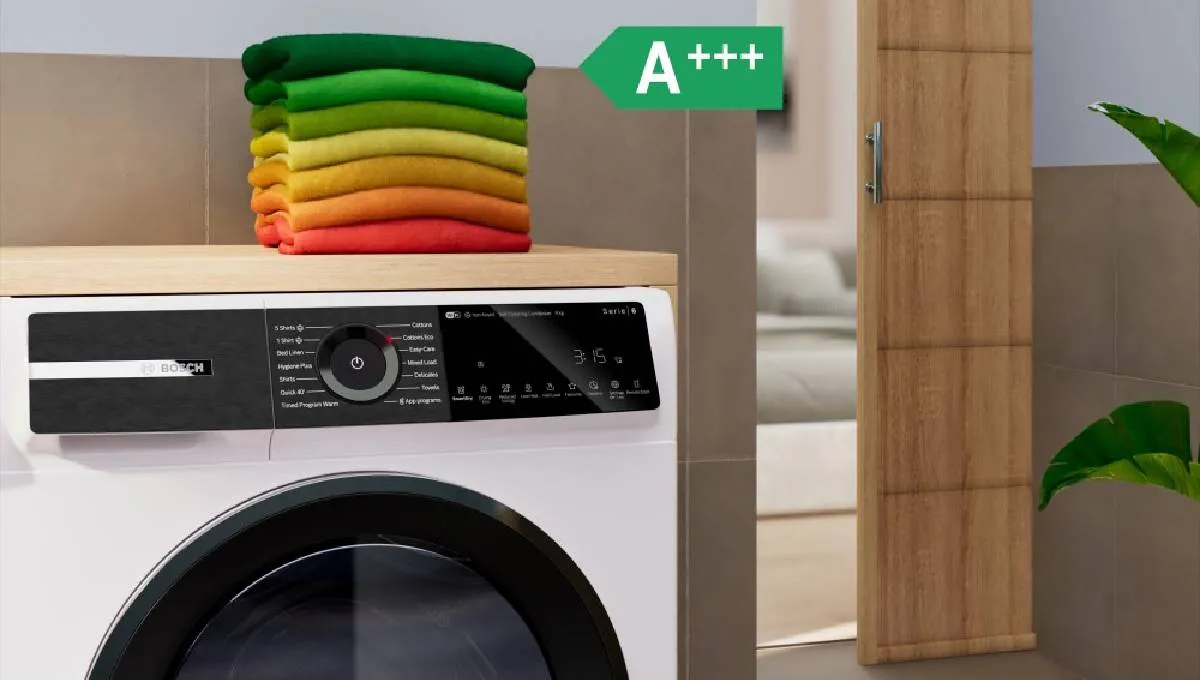
Many Bosch tumble dryers achieve high energy efficiency ratings. Please refer to individual product specifications for the energy efficiency class of each model.
4. How important is drying speed to you?
If shorter programme times are important to you, look for models with time-saving programme options designed to fit around busy schedules.
Many Bosch dryers feature AutoDry, which uses sensors to monitor moisture levels and automatically adjusts the programme. Selected washer dryers also include a Wash & Dry 60' programme for smaller loads.
5. How can I find a quieter tumble dryer?
If noise levels are an important consideration, compare the decibel (dB) rating of different models. A lower dB rating indicates a lower operating noise level.
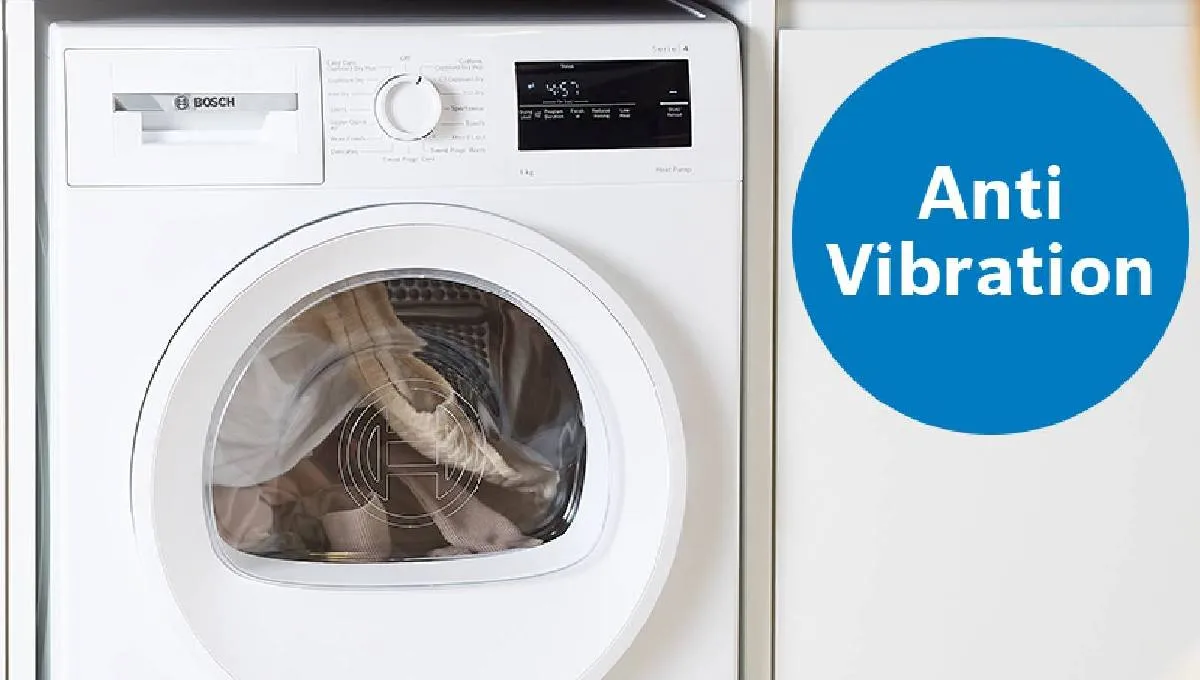
Many Bosch dryers feature AntiVibration side panels, designed to help reduce vibrations during operation. Selected models operate at noise levels between 57 and 63 dB*.
*Check individual product specifications for exact noise levels.
6. What fluff management features should I look for?
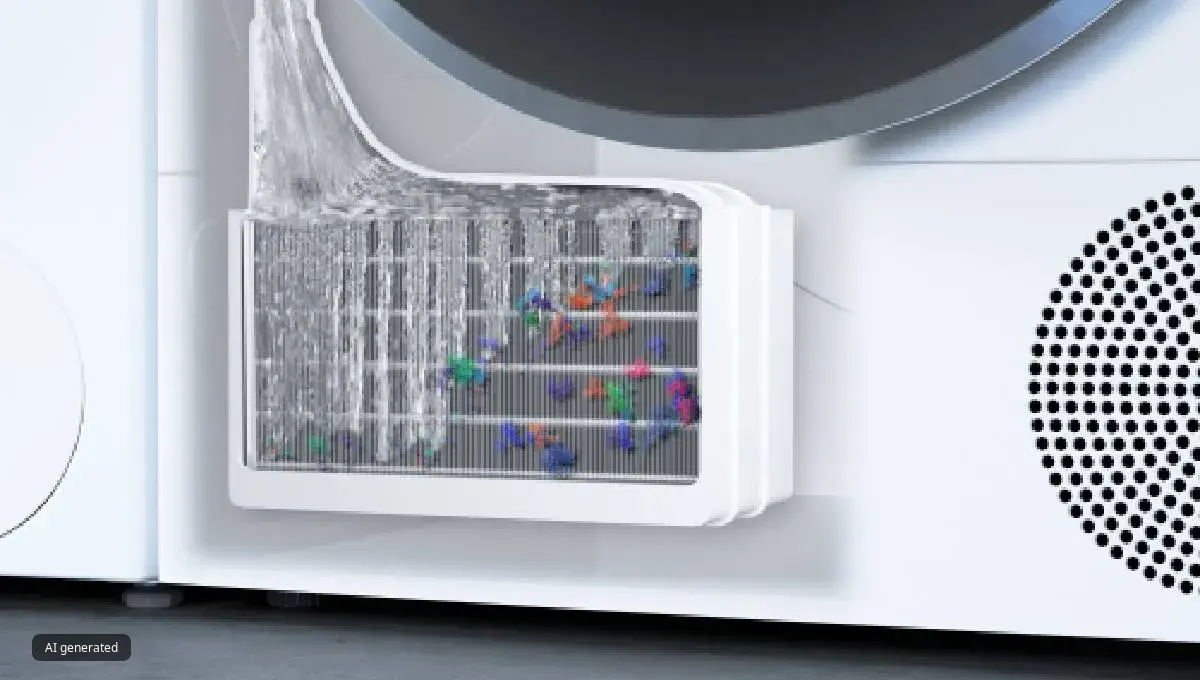
Fluff builds up in every dryer, but different models use different systems to manage it.
If you'd prefer less routine cleaning, opt for a model with SelfCleaning Condenser. The SelfCleaning Condenser automatically removes fluff from the condenser during the drying cycle. The door fluff filter should be emptied after every drying cycle as recommended.
If you're happy with routine filter maintenance, choose a model with a fluff filter and EasyClean filter: Some models feature a door fluff filter and EasyClean filter, which require periodic cleaning according to the user instructions.
7. Which features and programmes do I need?
Different models offer features designed to support different laundry needs. Consider whether smart connectivity, automatic programme selection or steam treatments are important to you.
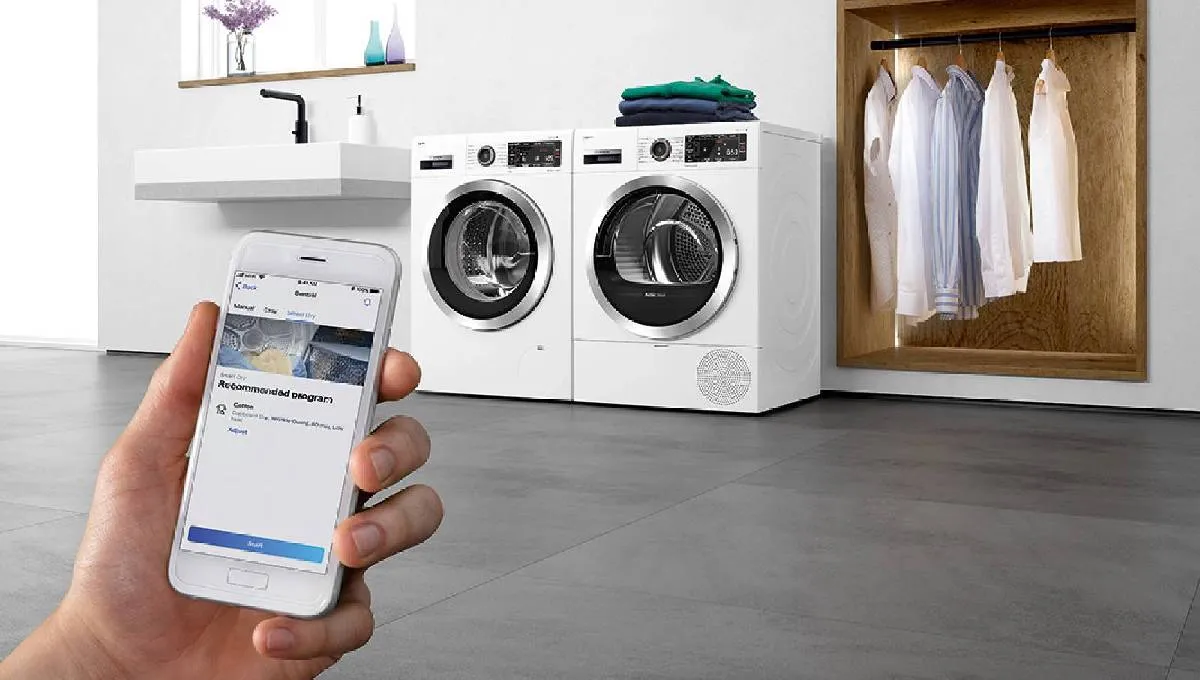
- Smart Dry: Automatically selects a suitable drying programme based on information from a compatible connected washing machine.
- SensitiveDrying System: Uses warm air and a specially designed drum structure during the drying process.
- Iron Assist: Uses steam treatment to help reduce creases in dry garments.
- Smart appliance: Lets you control and monitor your dryer using the Home Connect app.
8. Understand the 2027 tumble dryer legislation changes
From January 2027, new energy-efficiency requirements will apply to tumble dryers sold in Great Britain. These changes are designed to reduce energy consumption and help consumers compare appliances more easily.
What does this mean when choosing a tumble dryer?- Most new tumble dryers available from 2027 are expected to be heat pump models.
- Existing vented and condenser dryers can still be used, repaired and serviced.
- Energy labels have been rescaled, using updated A-G ratings to make efficiency easier to compare.
- A product's rating on the new scale cannot be directly compared with ratings from older labels because the testing and classification criteria have changed.
- Looking beyond the energy label can help you find the right appliance for your household, including features, capacity and drying programmes.
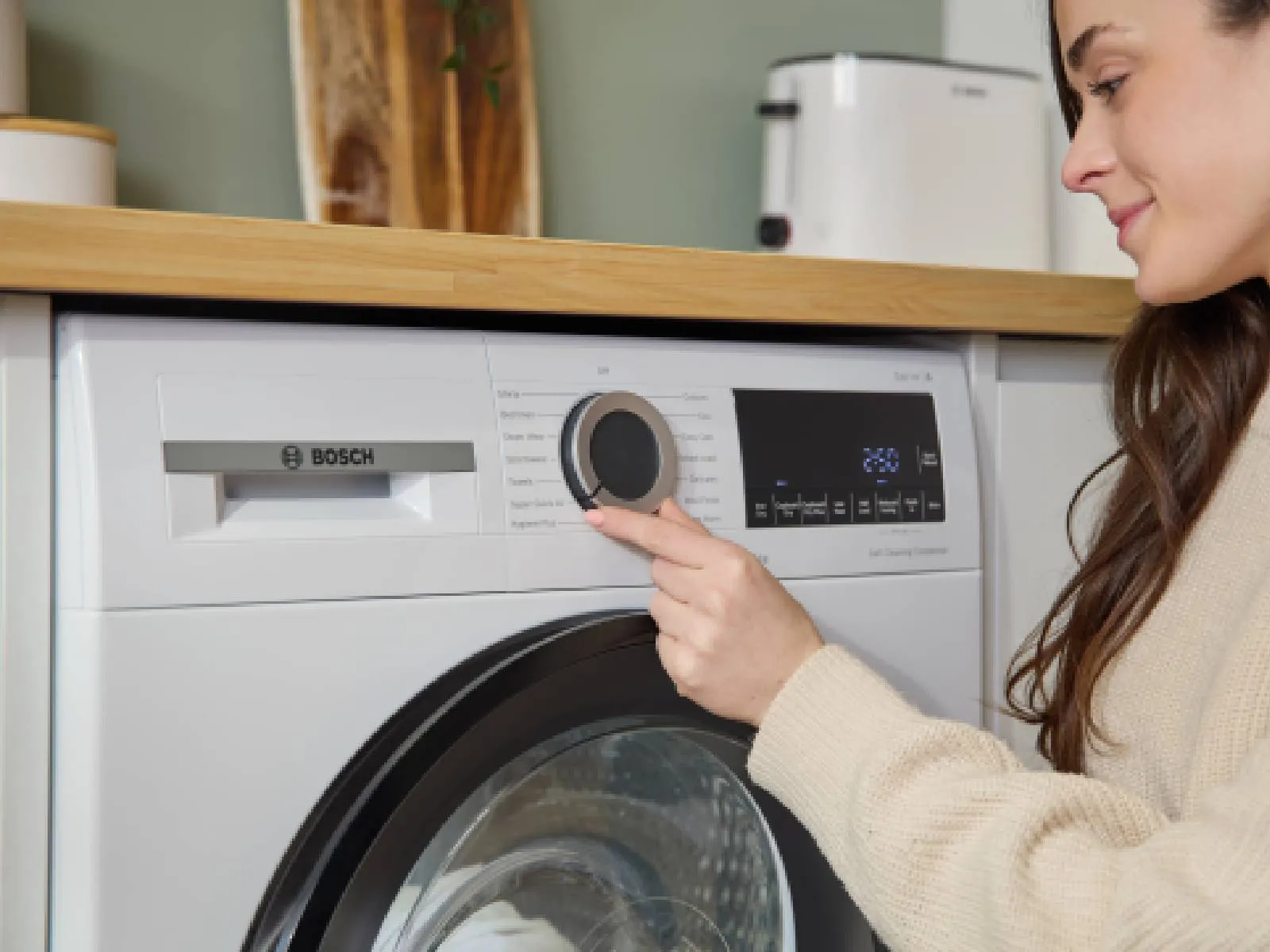
Bosch tumble dryer customer reviews
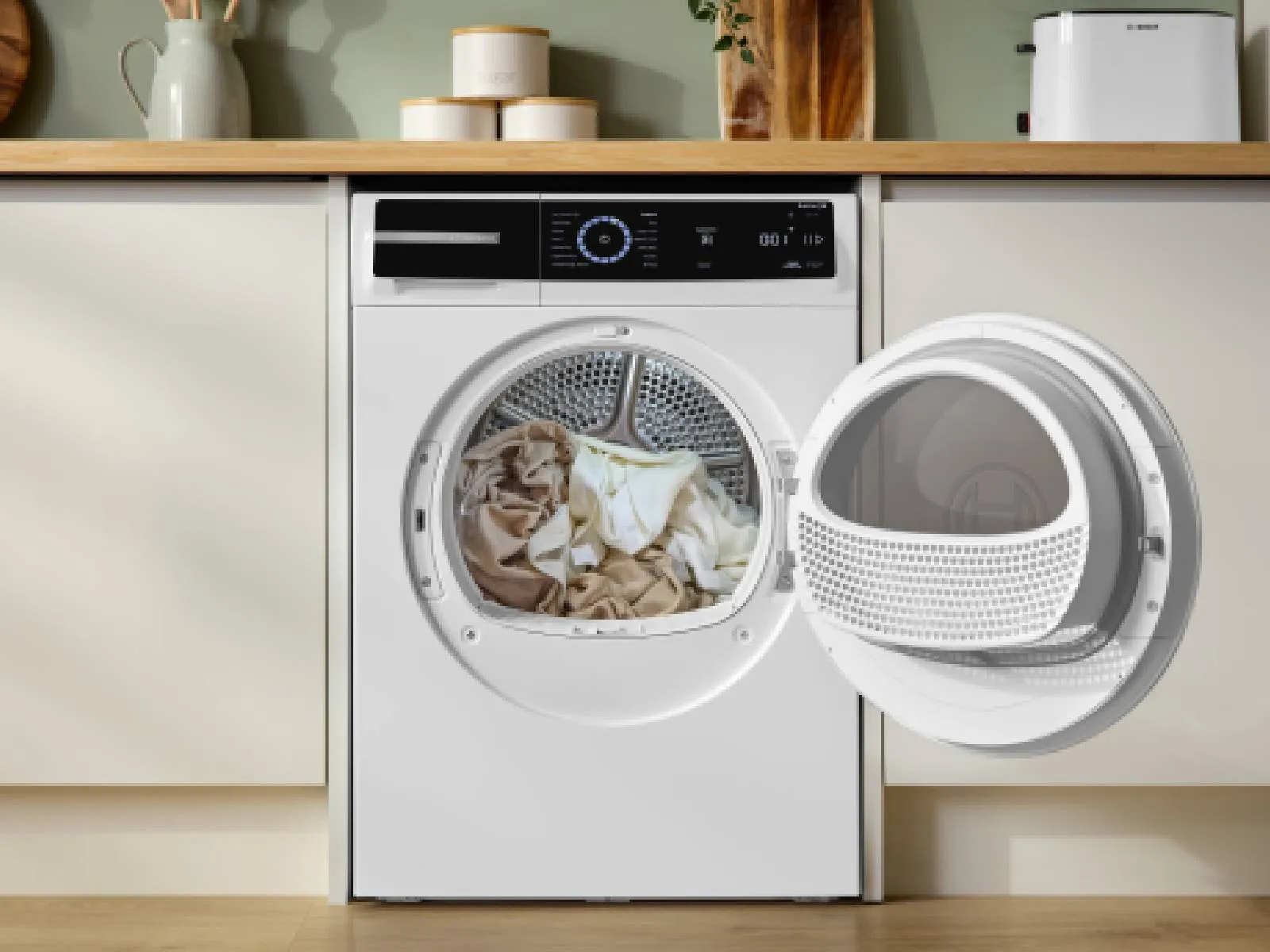
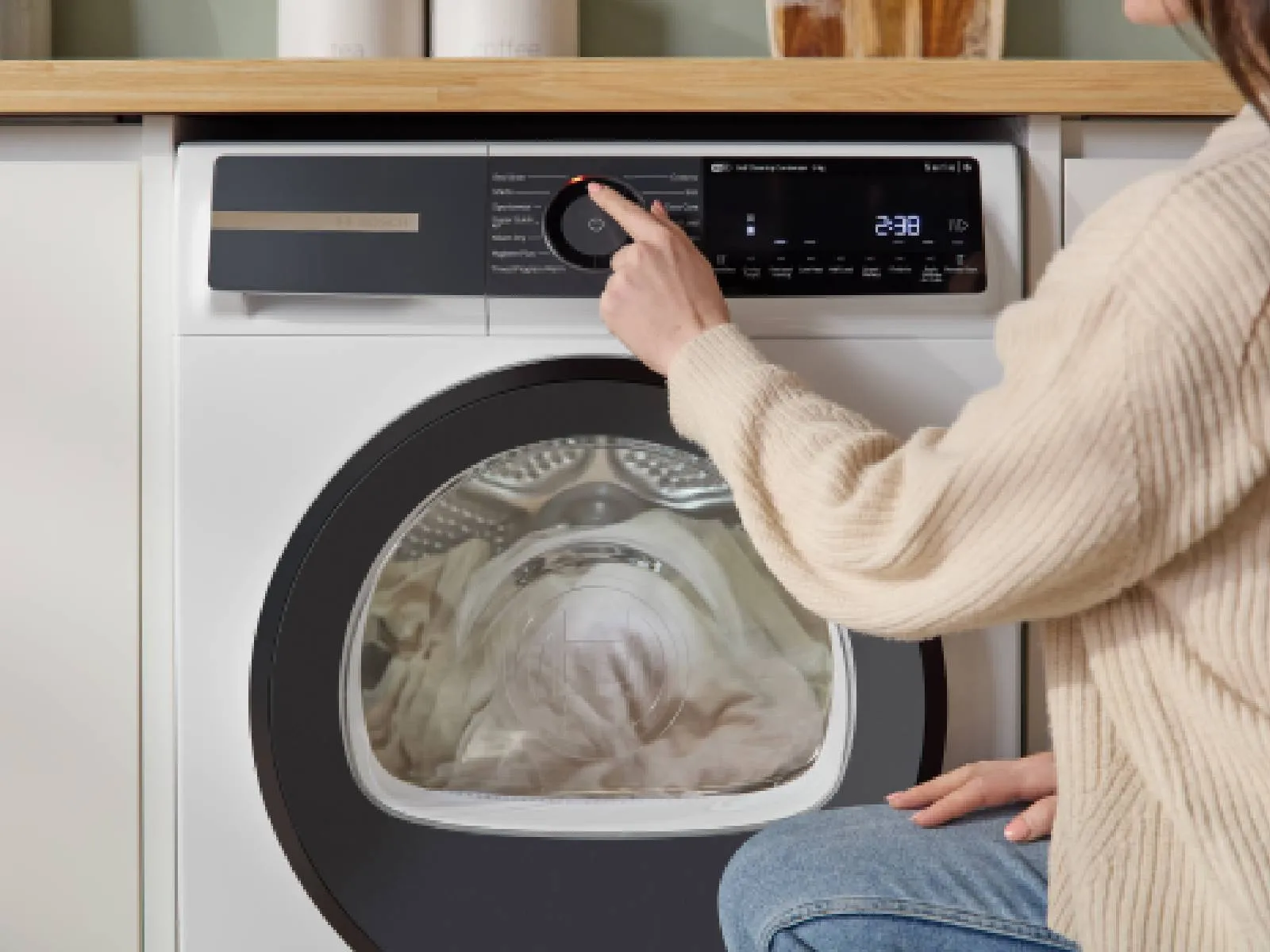
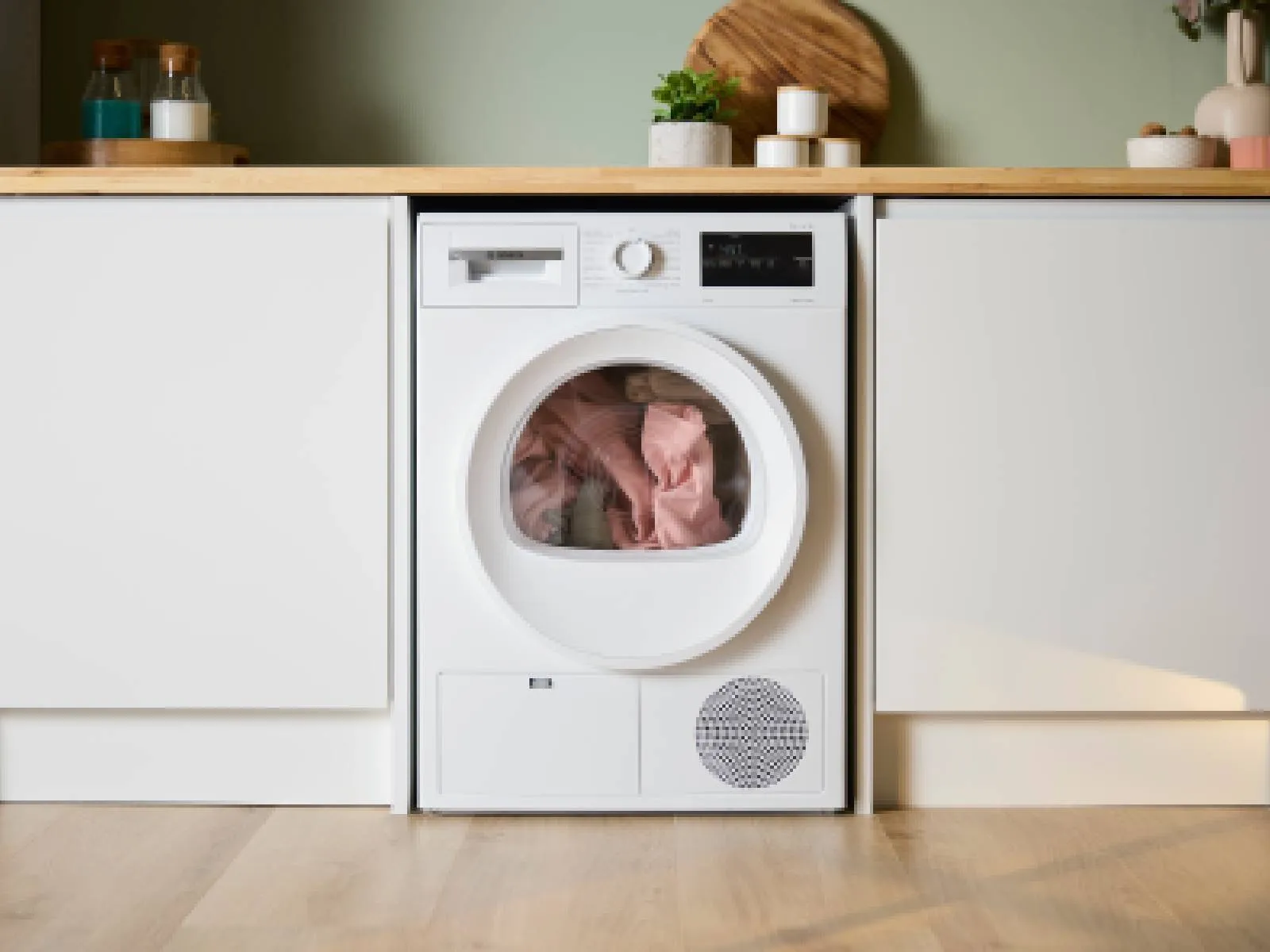
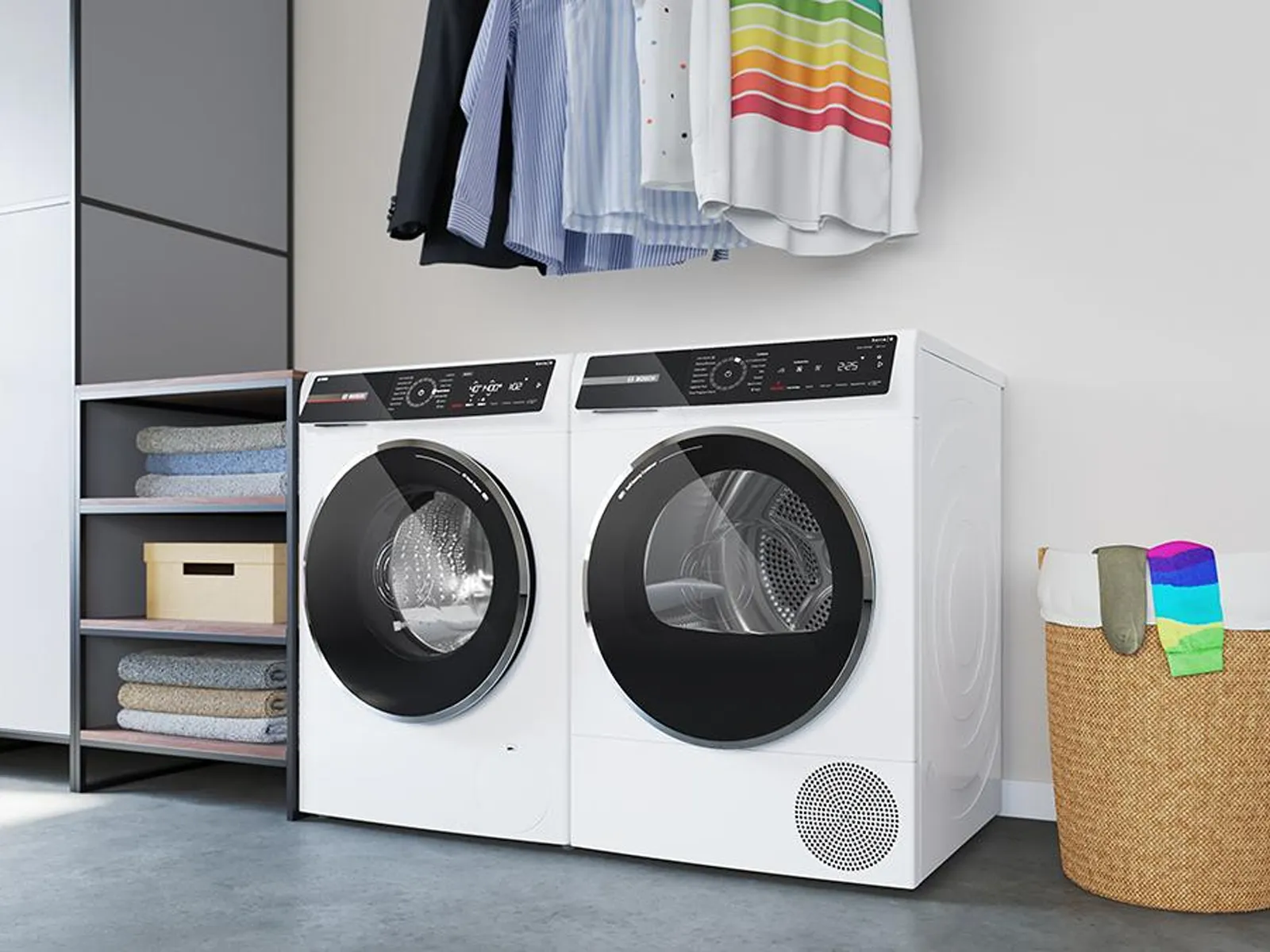
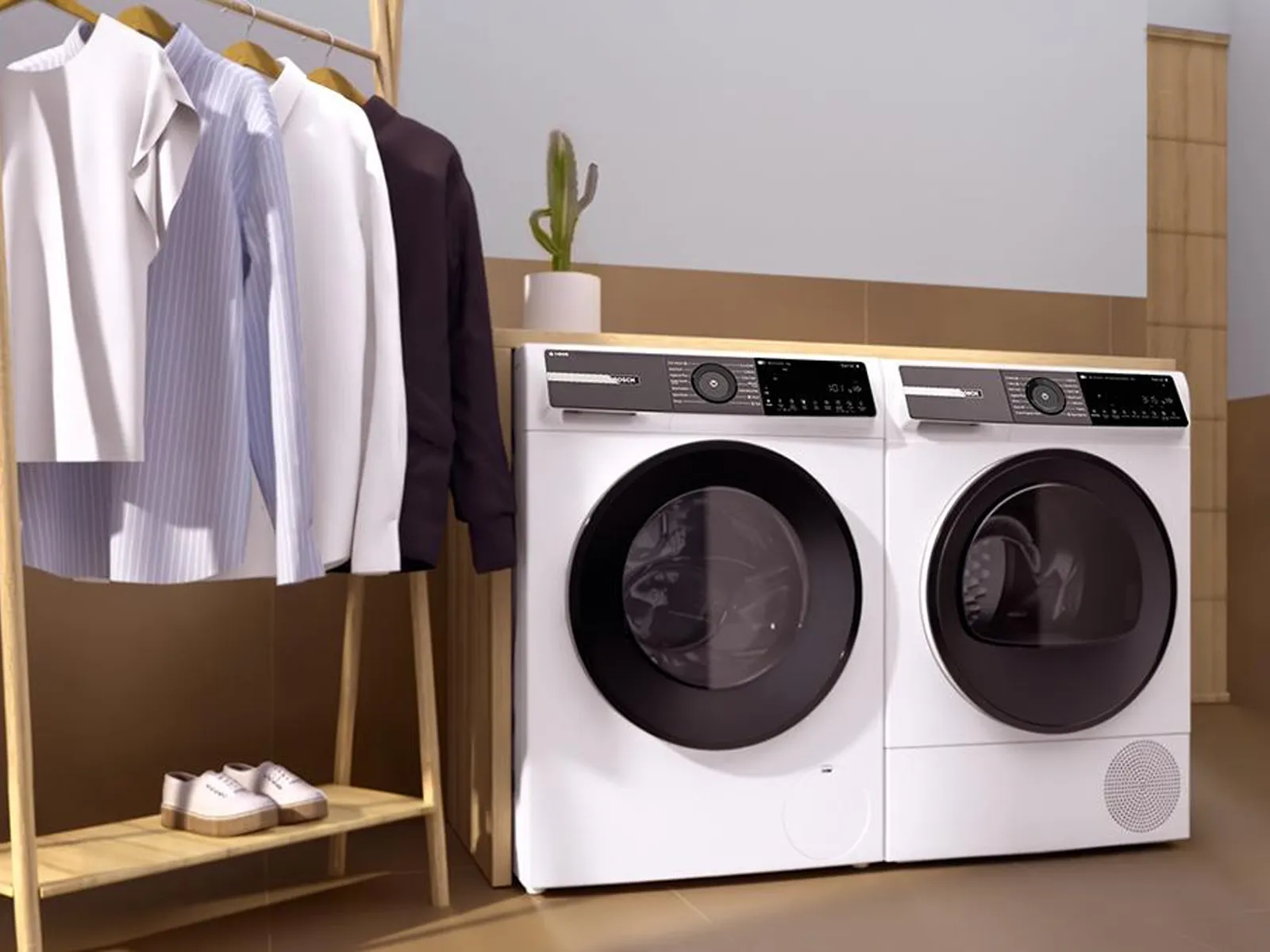
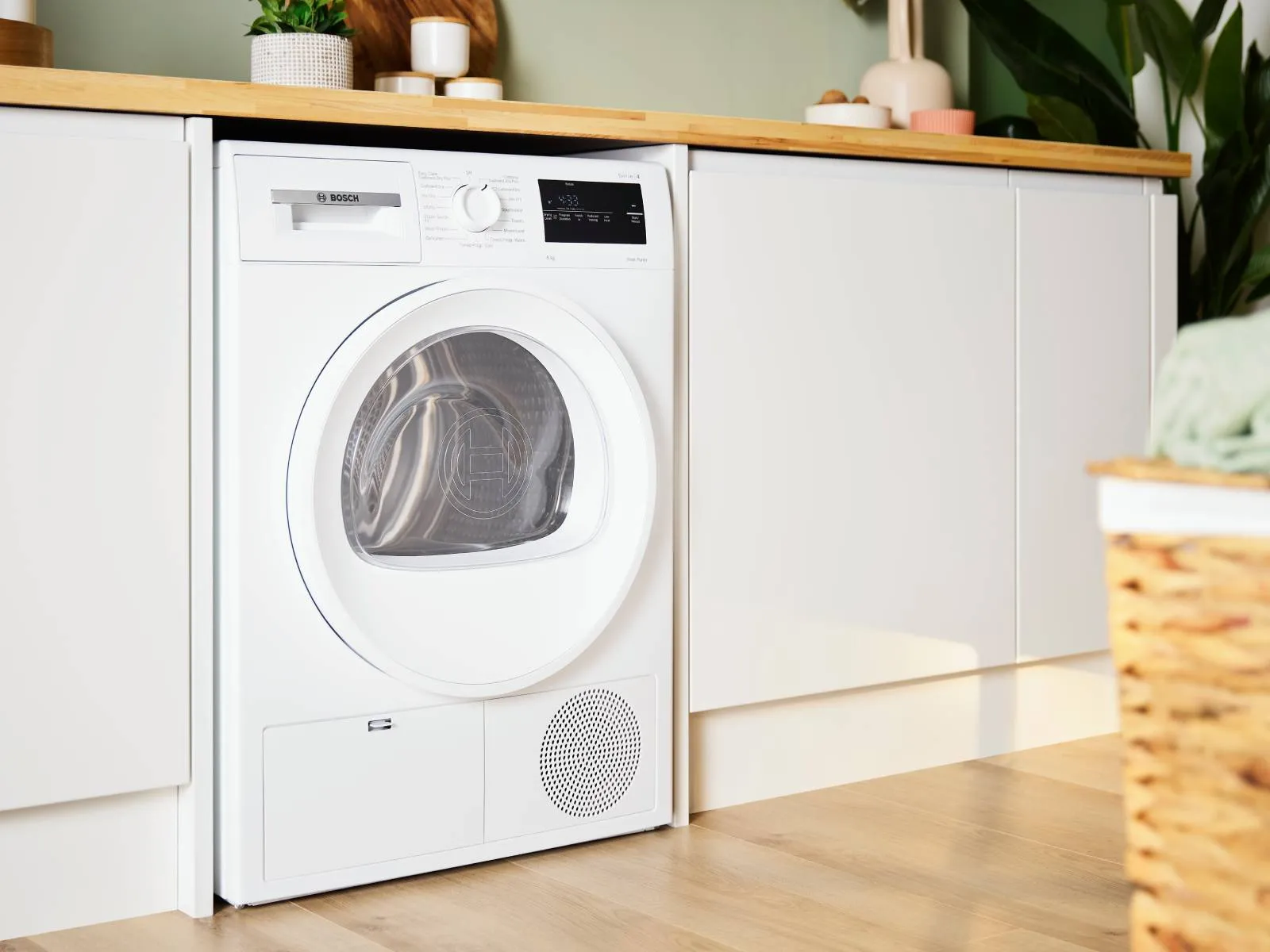
Explore the Bosch tumble dryer ranges
FAQs
How long can I expect a Bosch tumble dryer to last?
Bosch Tumble Dryers are tested to last for 20 years*!
*Based on internal endurance testing of the full appliance with high-intensity use, using 5 kg terry towels with 60% water content, where 100 intensive cycles simulate an average annual use of a normal household. This does not constitute a warranty or guarantee that our dryers last for 20 years.
What size is a standard tumble dryer?
A standard tumble dryer is typically approximately 60 cm wide, 85 cm high and 60–65 cm deep, with drying capacities usually around 7–9 kg.
- Typical dimensions: standard models ~60 cm (W) × 85 cm (H) × 60–65 cm (D); slim models ~45–50 cm wide; built‑under models usually 82–85 cm high to fit beneath worktops.
- Typical capacity: small 5–7 kg, standard 7–9 kg, large 9+ kg.
- Installation tip: leave 45–60 cm of clear space in front of the dryer so the door can open fully, and keep a few centimetres (usually 2–5 cm) at the back and sides for ventilation and hose/cable access. Always check the appliance spec sheet and measure your space before buying.
How often do I need to empty a condenser tumble dryer dryer?
Empty the water tank after every drying cycle, or whenever the “full” indicator lights up.
- Typical practice: empty after each load, even small loads can collect water, ensure to check the tank regularly.
- Models with drain options: some dryers can be plumbed to a continuous drain or use a drain hose; if yours has this, you won’t need to empty the tank manually but check the connection occasionally.
- Signs it needs emptying: full/replace indicator, reduced drying performance, or water visible in the collection container.
- Maintenance tips: wipe the tank dry before refitting, clean the lint filter after every load, and clean the condenser/heat‑exchanger per the manual to maintain efficiency.
- Safety tip: don’t run the dryer with an overflowing tank and follow the appliance manual for model‑specific guidance.
How do I clean my tumble dryer?
Clean your tumble dryer regularly: quick after every load, deeper checks monthly, and use mild, non‑abrasive products.
- After every load: remove the lint filter (brush/vacuum or wash with warm soapy water and dry) and wipe the drum, door and seal with a soft cloth and mild detergent; empty the condenser tank if fitted.
- Weekly/monthly: wipe the door seal and moisture sensors gently and check the lint trap housing.
- Monthly–3 months: clean the condenser/heat‑exchanger or heat‑pump filter per the manual (usually rinse with water).
- Every 6–12 months (vented): clean the external vent/duct with a vacuum or brush to remove lint.
- Panels/stainless steel: use mild soapy water or a suitable stainless cleaner and dry to avoid streaks.
- Avoid: abrasive pads, solvents, oven cleaners, flammable sprays and bleach unless the manufacturer allows it.
- Safety: unplug before deep cleaning, keep water away from electrical components, and follow the appliance manual.