
How to Install a Washer Dryer

Removing the transport locks
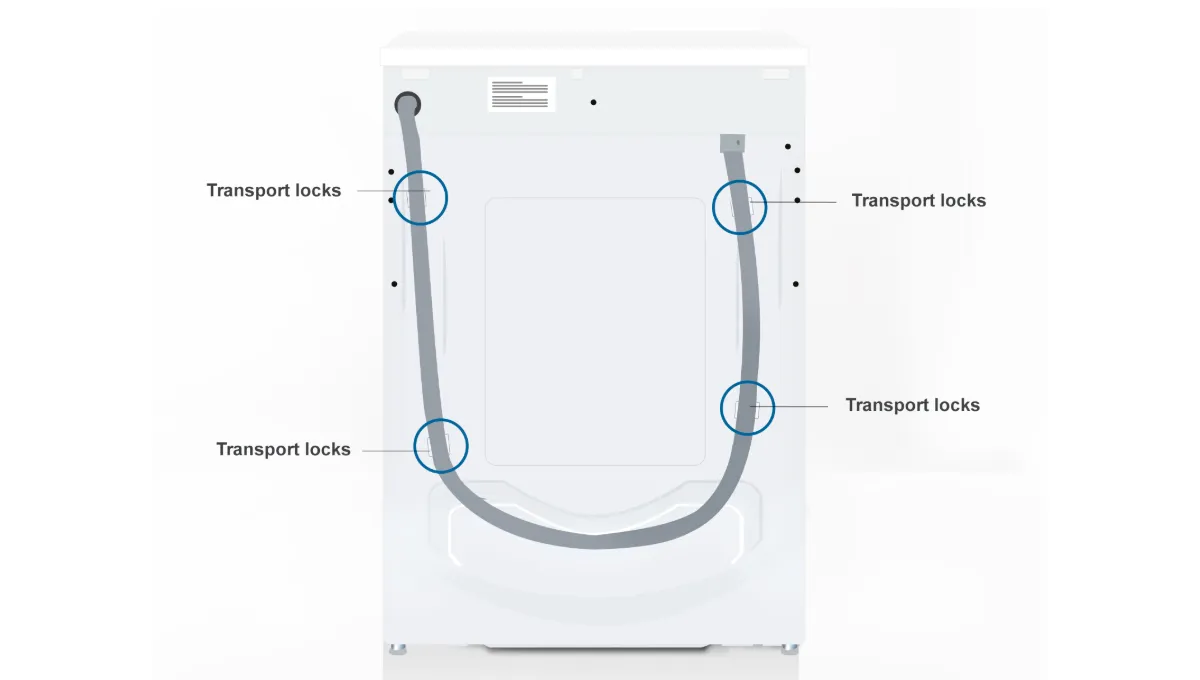
Before using the appliance for the first time, make sure that you completely remove all four transport bolts. Be sure to keep the transportation bolts and sleeves, in case you need to move the washing machine in the future.
Step by step guide
1. Pull the hose out of the holders.
2. Unscrew and remove all four transport bolts with a WA17 wrench.
3. Remove the sleeves. To do this, remove the mains cable from the holders.
4. Refit the covers. Lock the covers firmly in place by applying pressure to the snap-in hooks.
Levelling
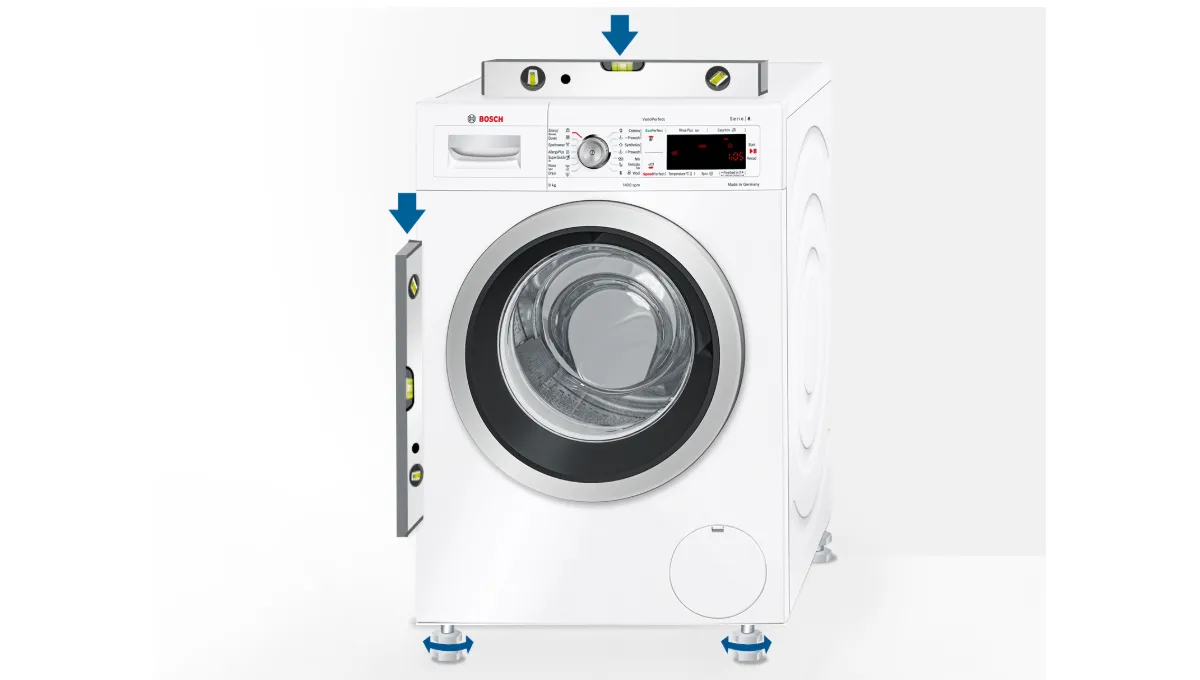
Use a spirit level to ensure that your appliance is standing correctly. Incorrect levelling may result in intense noise and vibrations.
Step by step
1. Loosen the lock nuts using a WA17 wrench, by turning in a clockwise direction.
2. Check the alignment of the washing machine with a spirit level and adjust the height of the appliance feet if necessary. All four appliance feet must stand firmly on the ground.
3. After adjustment, hold the foot firmly and tighten the lock nuts with the WA17 wrench by turning in an anti-clockwise direction.
Left-hand and Right-hand Connections
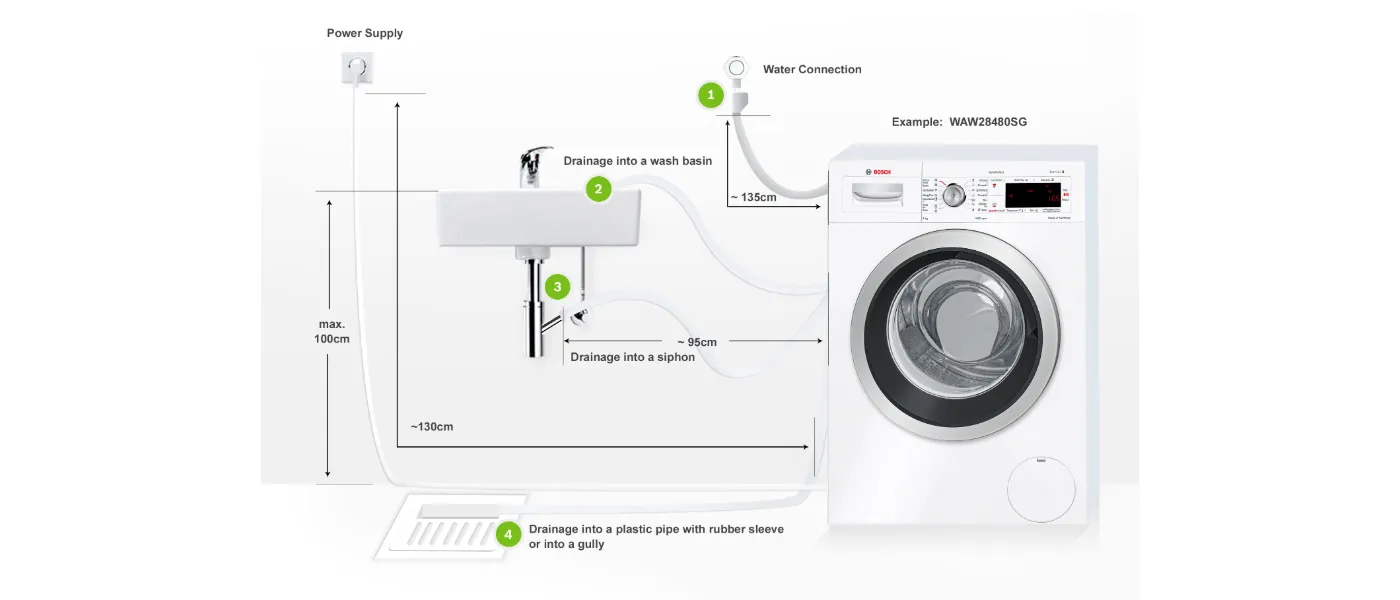
The washing machine can be connected to the water inlet and outlet either on its left or right side.
The following water inlet accessories are available from customer service:
- An extension for Aqua-Stop or cold water supply hose (approx. 2.50m) if available.
- A longer supply hose (approx. 2.20m) for standard models.
Water can be discharged via a siphon, sink, stand pipe or gully.
Left-hand connection
Right-hand connection
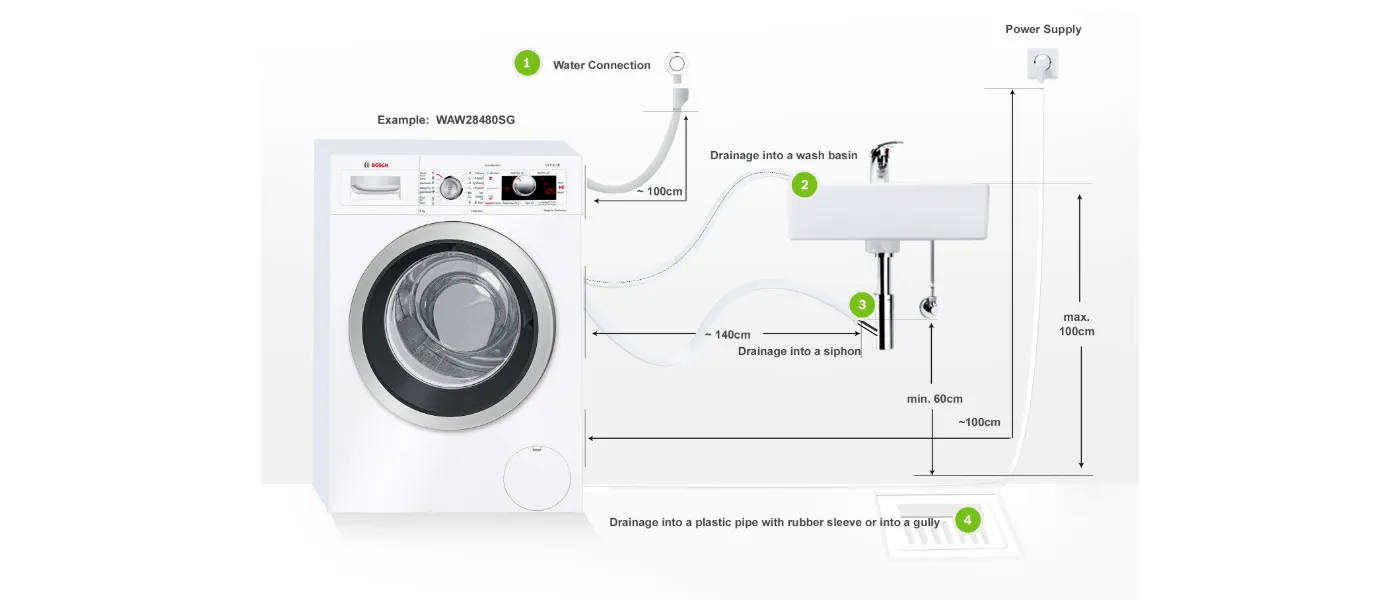
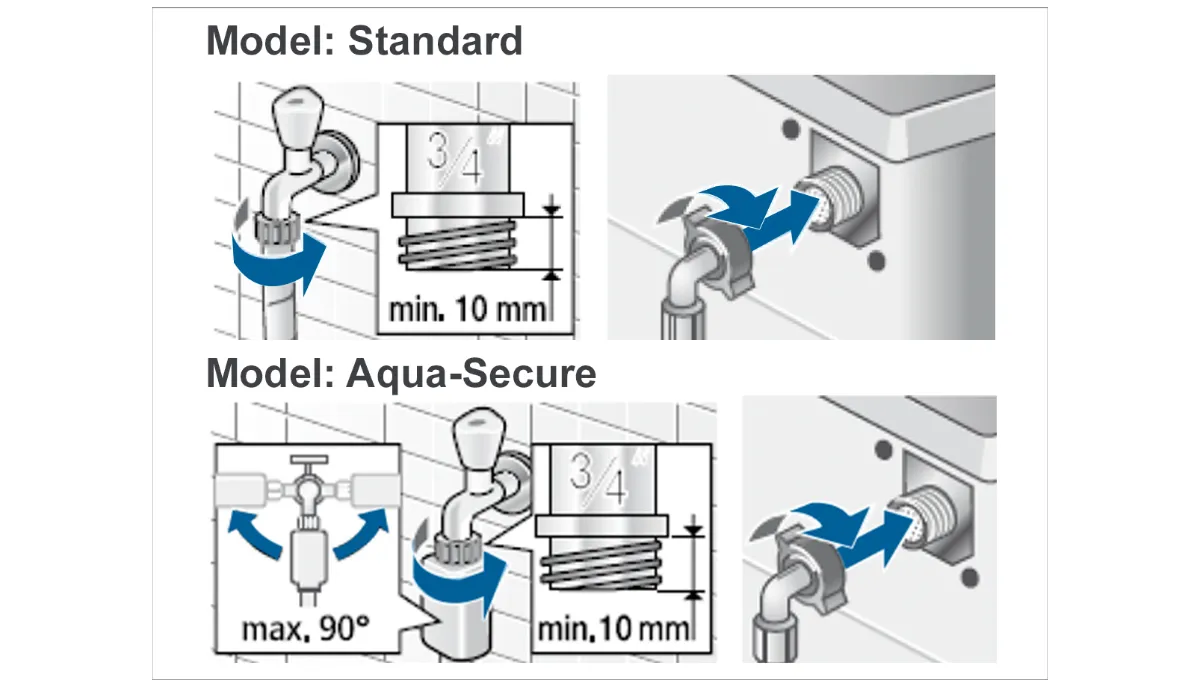
Water connection
1. Connect the water supply hose to the water tap (3/4" = 26.4mm) and to the appliance.
2. Open the water tap carefully, checking for potential leakage and tighten if necessary.
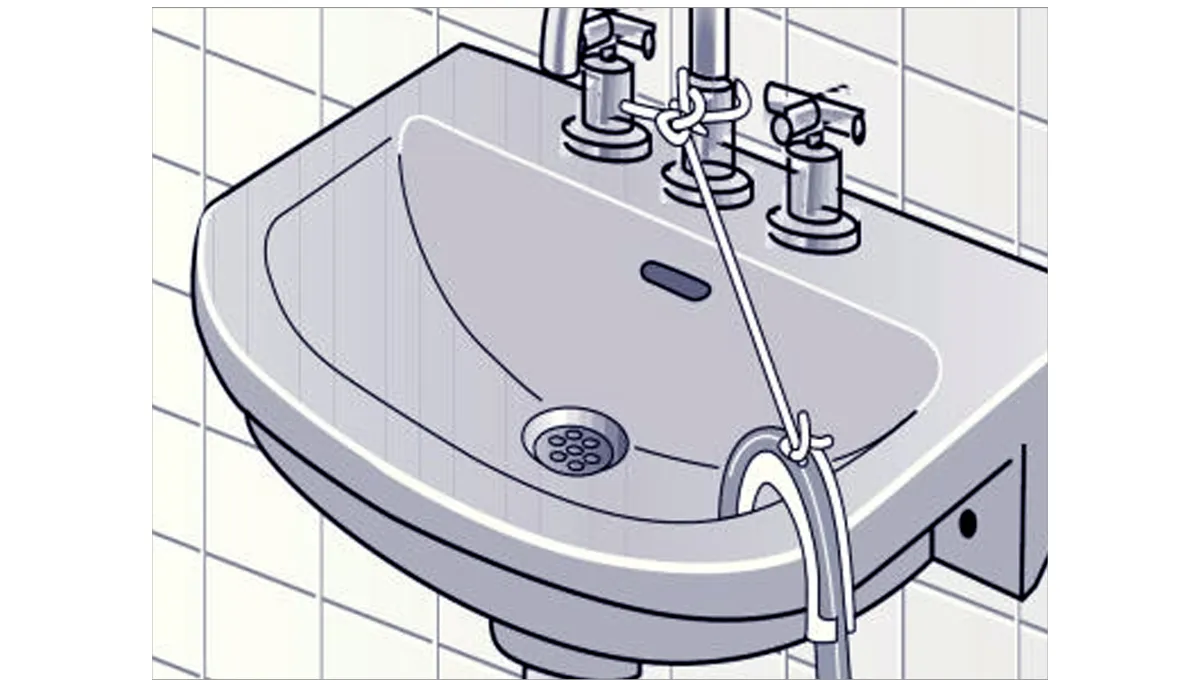
Drainage into a wash basin
If the attached drainage hose slips out of the washbasin due to high water pressure when draining the washing machine, leaking water may cause damage. Secure the drainage hose to prevent it from slipping out of the sink.
If the end of the drainage hose is immersed in the drained water, water may be drawn back into the appliance!
- The plug must not be in the plug hole.
- When the water is being pumped out of the washing machine, check that the water drains away quickly enough.
- The end of the drainage hose must not be immersed in the drained water.
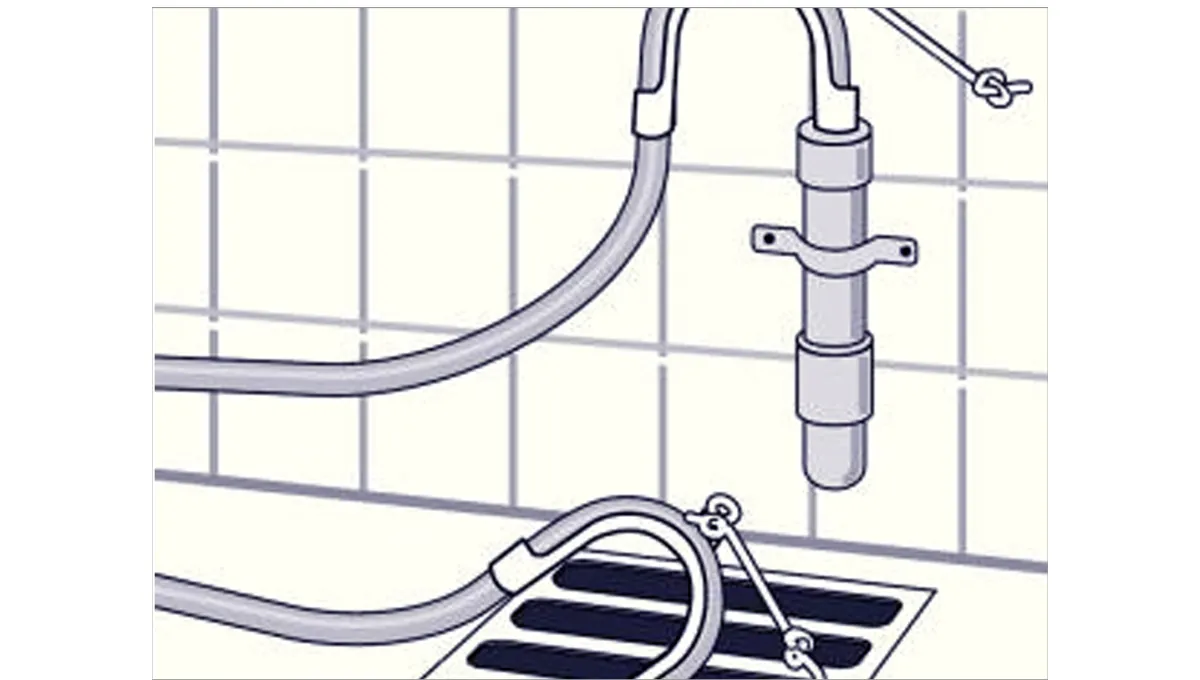
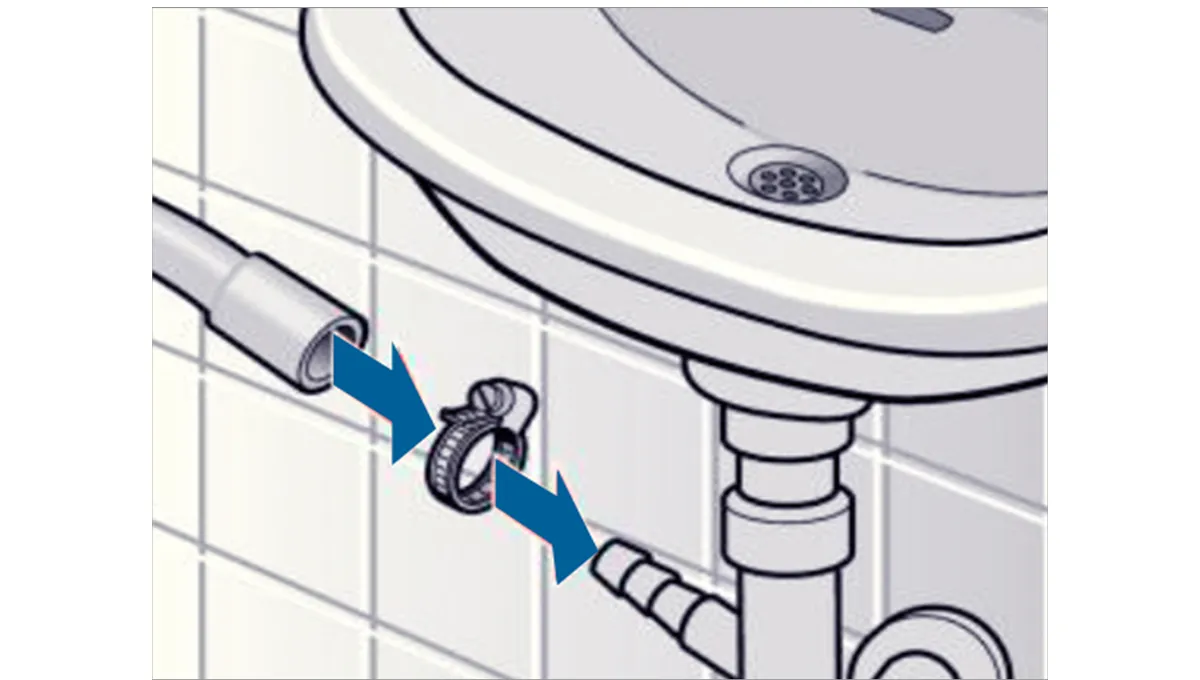
Drainage into a siphon
If the drainage hose slips off the siphon connection due to high water pressure when draining the washing machine, leaking water may cause damage. Connection point must be secured with hose clip, Ø 24–40 mm.
Drainage into a plastic pipe with rubber sleeve or into a gully
If the drainage hose slips off the plastic pipe due to high water pressure when draining the washing machine, leaking water may cause damage. Secure the drainage hose to prevent it from slipping out.